Maritime Hydrographic Directorate
History
The history of the Maritime Hydrographic Directorate and the evolution of its leadership.
Institutional history
Until 1882, Romanian vessels navigated using Danube route guides drawn up by Russian specialists and marine charts produced by English specialists. As the presence of military vessels on the Danube grew and the Naval Cadets' School was established, the need arose for Romanian-made documents. To this end, Naval Major Mihail Drăghicescu, who had become Chief of Staff of the Flotilla, ordered that during training marches on the Danube and the practical training of cadets aboard Romanian vessels, surveys be carried out on the Danube in order to accurately determine the navigable channel and existing navigational obstacles.
In 1882 and 1883, under Major Mihail Drăghicescu, the crews and cadets aboard the vessels Fulgerul and Lebăda gathered a wealth of material which, skilfully used by Naval Major Drăghicescu, led to the compilation of the first Romanian chart of the Danube. This chart was reproduced at a scale of 1:28,000 in 1895 and was continuously updated by military vessel crews during training marches on the Danube. The chart remained in good use until 1904. In 1885-1886, the first hydrographic surveys on the Romanian Black Sea coast were carried out in the Sulina – Gura Portiței area, aboard the gunboat Griviţa, with the aim of studying the possibilities of entry into Lake Razelm.
From 1893, a group of hydrographic and hydrological researchers, led by Grigore Antipa, carried out several survey campaigns aboard the cruiser Elisabeta, the brig Mircea and the gunboat Griviţa.
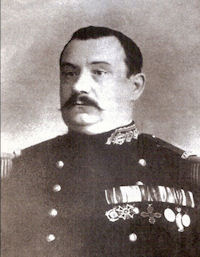
The first hydrographic research structure was the Special Section for Hydrographic Works on the Danube and at Sea, established in 1897 and led by Lieutenant Commander Alexandru Cătuneanu, a hydrography specialist who had trained in France and taken part in two hydrographic campaigns in the Far East and Caledonia. On 30 June 1897, several officers were assigned to the Special Section for Hydrographic Works, which, under the command of Lieutenant Commander Alexandru Cătuneanu, began the hydrographic survey of the Romanian coast. Soundings were taken up to a distance of 10 km from the coast, along survey lines spaced 2,500 m apart.
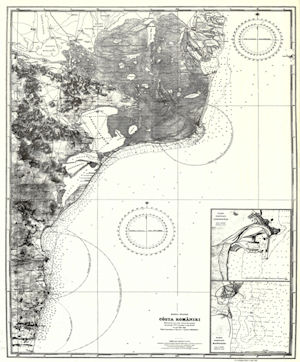
In 1900, after four years of painstaking work, the first Romanian marine chart, known as the Cătuneanu Chart, was compiled based on materials resulting from hydrographic and hydrological surveys carried out with the brig Mircea and the launch Rahova. It was printed in Paris that same year and was awarded the gold medal at the World's Fair held in the French capital. Updated and reprinted in 1929, it remained in use in the Romanian Navy until 1952.
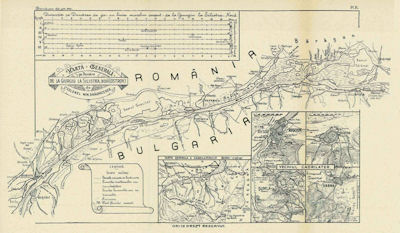
In 1900, on the occasion of the demarcation of the Romanian-Bulgarian border, Romanian officers, together with Inspector D. Kehaia, carried out hydrographic surveys on the Danube in the Silistra – Gura Văii area, resulting in a chart of the Danube at a scale of 1:50,000 and another of the Ostroave islands at a scale of 1:20,000.
In 1904, a Naval River Piloting and Hydrography Service was established in Galați, within which a practical school of river piloting operated.
On 23 February 1926, by Ministerial Decision No. 126, issued under the provisions of the 1898 Navy Organisation Act and Article 1 of the 1912 Regulations on the Operation of the Navy, the Maritime Hydrographic Service was established, with its headquarters in the building of the Naval School in Constanța (which today houses the Romanian Navy Museum). Between 1926 and 1940, the Maritime Hydrographic Service carried out numerous specific actions, the most significant of which were: hydrographic surveys at the mouths of the Danube, prospecting for the expansion of the Port of Constanța, and the publication of navigational charts at a scale of 1:50,000 for the Romanian coastal area.
Between 1940 and 1945, the Maritime Hydrographic Service provided hydrographic and hydrometeorological support for the Navy's combat operations.
Between 1945 and 1955, DHM took part in the redevelopment of river routes and the coastline for navigation, and published over 20 new navigational charts, at various scales, for the western Black Sea area.
On 11 November 1955, by Decision No. 2444 of the Council of Ministers of the Romanian People's Republic, the Maritime Hydrographic Service was reorganised into the Maritime Hydrographic Directorate (DHM).
Between 1955 and 1990, the Maritime Hydrographic Directorate carried out a wide range of activities for the benefit of Romanian military and civilian vessels, in order to ensure navigational safety within Romania's area of responsibility. The most significant of these were: the construction and commissioning of the Constanța (1960) and Sf. Gheorghe (1968) lighthouses, and the publication of the "Black Sea Pilot" and of notices to mariners.
Since 1966, DHM has represented the Government of Romania as a Member State of the International Association of Marine Aids to Navigation and Lighthouse Authorities (IALA).
From 1971 to the present day, DHM — a uniquely specialised institution in the country and Romania's leading expert in matters of maritime geography and maritime delimitation — has contributed specialists to the National Interministerial Commission for negotiating the delimitation of the exclusive economic zone and the continental shelf of the Black Sea.
In 1985, the International Hydrographic Organization assigned the first international series number to a Romanian marine chart — INT3820, for chart 1.300.01, Black Sea. Coast of Romania. From Nos Kaliakra to the Danube Delta, scale 1:300,000 — printed the following year and listed in the Catalogue of International Charts in 1993.
After 1990, the institution was reorganised, moved to its current headquarters, and achieved, among other things: the publication of 37 national navigational charts, and the publication of the "List of Lights, Fog Signals and Radio Beacons of the Black Sea and the Sea of Marmara" and of the "Nautical Tables".
In 2002, DHM produced Romania's first Electronic Navigational Chart (ENC).
Between 2002 and 2003, the Integrated National Meteorological System of the Naval Forces (SIMIN-FN) was developed.
In 2004, Law No. 395 on maritime hydrographic activity was published in Official Gazette No. 941. This law establishes and regulates the activity of the Maritime Hydrographic Directorate and grants our institution the status of national authority in this field.
Since January 2007, DHM has represented the Government of Romania as a Member State of the International Hydrographic Organization (IHO).
Since 2008, DHM has been accredited as an institution carrying out scientific research activities, being involved in projects with national and European funding.
In 2008, the Maritime Hydrographic Directorate contributed a cartography specialist to the national delegation on the Black Sea maritime delimitation case at the International Court of Justice in The Hague, related to the establishment and delimitation of the continental shelf of the Black Sea between Romania and Ukraine — a matter concluded in 2009 with the delivery of the Court's judgment.
In 2010, following a vote by the Member States of the Mediterranean and Black Sea Hydrographic Commission, the Maritime Hydrographic Directorate received the second international series number for a Romanian navigational chart — INT3905, for chart 1.030.02, Black Sea. Coast of Romania. Port of Constanța with Approaches, scale 1:30,000 — listed in the Catalogue of International Charts that same year and printed in 2014.
In 2010, DHM published for the first time a new annual notice to mariners, in both Romanian and English — the Cumulative List of Notices to Mariners.
Since 2011, DHM has published annual and monthly notices to mariners in both Romanian and English — Notices to Mariners, Notices to Mariners Special Edition, and the Annex to the Special Edition of Notices to Mariners.
As of 2012, the Maritime Hydrographic Directorate became the 27th hydrographic office worldwide to be recognised as a producer of electronic navigational charts, through its affiliation with the International Centre for Electronic Navigational Charts (IC-ENC), hosted by the United Kingdom Hydrographic Office.
In 2013, the first Romanian electronic navigational chart — chart No. RO405002 (the electronic equivalent of nautical chart 1.050.02, From Cape Tuzla to Cape Midia) — was validated and distributed internationally by the International Centre for Electronic Navigational Charts (IC-ENC).
As of 2016, the notices to mariners laboratory (AWNIS) also carries out duties specific to an AWNIS cell (Allied Worldwide Navigational Information System). The AWNIS cell takes part in international Naval Forces military exercises, providing safety and security of navigation (SASON) information to support freedom of navigation.
Two new nautical publications were produced — the List of Lights and Fog Signals of the Black Sea and the Sea of Marmara (DH-103), 4th edition, and the Rules of the Maritime Buoyage System (DH-104), 2nd edition — along with 4 specific regulatory documents on marine cartography, containing the technical specifications required for the production of the first NATO-type special naval charts.
From that year onward, all Romanian navigational charts have been compiled in the international geodetic system WGS84.
In 2015, two more international series numbers were obtained for two Romanian maritime navigational charts — INT3907, for chart 1.050.06, From the Sfântu Gheorghe Mouth to the Musura Mouth, scale 1:50,000, and INT3908, for chart 1.030.09, Port of Sulina with Approaches, scale 1:30,000 — listed in the Catalogue of International Charts and printed the following year. The first NATO-type special naval charts were produced, along with a specific regulatory document containing the technical specifications for producing all types of special naval charts used within NATO.
In 2016, 6 electronic navigational charts were validated by IC-ENC across usage bands.
The nautical publication Symbols and Abbreviations Used on Romanian Navigational Charts (DH-105), 2nd edition, was produced.
At the beginning of 2017, 8 electronic navigational charts were validated by IC-ENC in usage bands 4 and 5.
At the end of 2019, 16 electronic navigational charts were validated by IC-ENC in usage bands 2, 4, 5 and 6.
Since 2020, all maritime navigational charts produced include a QR code, which, when scanned, provides access to the DHM website, allowing users to view updates for each chart.
1926-1935
Captain Alexandru STOIANOVICI
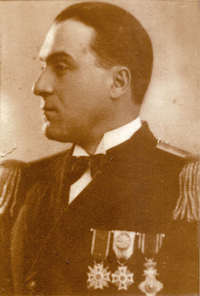
He was born in Constanța on 6 September 1892 and died in Bucharest on 8 January 1951. After finishing secondary school in his home town, he enrolled in the Faculty of Mathematics at the University of Bucharest, but due to the outbreak of the Second Balkan War in 1913, he transferred to the School of Artillery, Engineers and Navy, graduating in 1915 with the rank of Sub-Lieutenant. He was promoted to Lieutenant in 1917, Captain (by selection) in 1919, Lieutenant Commander in 1927, Commander in 1935, Captain in 1938, and Rear Admiral in March 1944. He was placed on the reserve list ex officio on 9 August 1947.
In his early career he served as an artillery officer, in which capacity he took part in the First World War, manning the 75 mm batteries at Turtucaia, where he showed great devotion to duty. In 1919, he was appointed second-in-command of the monitor Alexandru Lahovary, and three years later, in the same capacity, took part in the march of the monitor Brătianu to Belgrade. In the summer of that year he was transferred to the Sea Division. There he was given command of the gunboat Stihi, with which he carried out his first hydrographic survey in 1925, in the Techirghiol Lake area. In November 1925, he was tasked with establishing the Hydrographic Service.
In the summer of the following year, he carried out survey works on Lake Siutghiol "in a very conscientious and scientific manner, for which he deserves praise." In 1927, he attended a specialisation course at the School of Hydrography in Genoa, where he carried out practical exercises — triangulation, baseline measurements, soundings, topographic operations, astronomical measurements — aboard the vessel Magnaghi. On graduation, the course director assessed him as "a cultured, intelligent officer, passionate about hydrography, capable of carrying out any work of this kind."
On his return to the country, the commander of the Sea Division, Rear Admiral Vasile Pantazzi, remarked that "if we are able to provide him with the necessary means, our Navy's Hydrographic Service will, under his leadership, rise to the level of similar institutions abroad." During this period, he also taught the Hydrography and Nautical Science courses at the Navy's Application School. In the following years he also taught navigation and meteorology courses.
As commander of the gunboat Stihi, he led the training voyage of officer cadets from the Preparatory and Application School between 20 August and 10 September 1936, which took place in the Sea of Marmara and the Aegean Sea. Alongside his role as head of the Maritime Hydrographic Service, he also led the Submarine Training Centre. In October 1937, he took command of the destroyer Regina Maria, aboard which he weathered the storm of 4-6 January 1938, during which "for 36 hours he remained steadfast at the ship's command."
In the summer of 1938, he led the hydrographic survey of the chart of Balcic Bay and skilfully directed the work of the Hydrographic and Photogrammetric Directorate within the Ministry of Air and Navy. "Given the merger of the Navy with the Air Force, as Head of the Hydro-Aero-Photogrammetric Office, he showed particular zeal in equipping the office with the modern instruments needed for aeronautical and naval surveys, and worked intensively both as an independent body of the Ministry and in cooperation with the Army's Geographic Institute."
The following year, he was appointed commander of the Upper Danube Sector, remaining with the Danube Division throughout the war; moreover, on 23 April 1943, he took command of the River Forces. After the war, he was also appointed a member of the War Ministry's Special Investigation Commission, where "he worked honestly and devotedly, demonstrating a deep knowledge of laws and regulations."
1935-1939
Lieutenant Emil GRECESCU
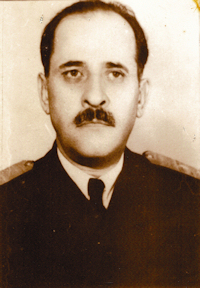
He was born on 1 January 1905 in Bucharest, where he also died in 1981, his ashes scattered in the Black Sea in accordance with his wishes. After completing secondary school in the capital, he enrolled at the Naval School in Constanța, graduating in 1924, when he was promoted to Sub-Lieutenant. Four years later he received the rank of Lieutenant, then was promoted by selection to Captain in 1936, Lieutenant Commander in 1942, again by selection to Commander in 1944, likewise to Captain in 1947, Rear Admiral in 1951, and Vice Admiral (reserve) in 1957.
At the start of his career he was assigned to the Naval Base, and on 26 May 1926 was appointed onboard officer and second officer of the Hydrographic Service, a duty he "discharged conscientiously and beyond all praise," as his superior, Captain Al. Stoianovici, wrote. The assessment continued: "Of sound judgment, intelligent and eager to learn. Very conscientious, he carries out the orders he receives with great scrupulousness, showing great zeal and devotion in his service. With affection for the personnel under his command and care for equipment, Lieutenant Grecescu is a most deserving officer of our Navy."
On 10 September 1935, following the establishment of the Hydrographic and Aero-Photometric Office, he was appointed head of the Maritime Hydrographic Service, personally taking part in soundings and the compilation of charts. As deputy director of the Hydrographic and Photogrammetric Office, between 25 March and 2 May 1938 he took part in a fact-finding trip to various manufacturers in Italy, Switzerland, Germany and France, with a view to ordering hydrographic instruments and equipment.
Under Captain E. Grecescu's direction, the plotting of the soundings taken in the summer of 1937 was completed, along with the production of the Ekrene-Balcic section of the marine chart. During the 1938 summer campaign, he commanded the vessel Stihi and the hydrographic survey works in the Ekrene-Balcic-Caliacra region. His superior, Commander Al. Stoianovici, noted that "thanks to his tireless work, the surveys begun in that region in the summer of 1937 could be successfully continued."
As commander of the vessel Stihi and second-in-command of the destroyer Regina Maria, he took part in the royal manoeuvres in October 1938. At their conclusion, Commander Horia Macellariu wrote: "He supported me throughout in the best conditions, showing outstanding military qualities and advanced professional knowledge (...). He is capable and can withstand the hardships of war."
In the summer of 1939, he carried out hydrographic surveys between Cavarna-Caliacra-Șabla; "the result of this campaign was brilliant, thanks to the skill and ability of Captain Grecescu, and the data gathered will form the basis of the first Romanian nautical chart," concluded Captain Stoianovici. In the early part of the war he held the position of Head of the Hydrographic Office.
For one year — April 1942 to April 1943 — he served as second-in-command of the destroyer Regina Maria, taking part in 28 combat missions. "During these operations," wrote the commander of the Destroyer Squadron, Captain Horia Macellariu, "the ship was attacked several times by enemy submarines and aircraft at sea. He deserves to be proposed for promotion by selection to the rank of Lieutenant Commander."
For three years, 1943-1946, he was Director of Studies at the Naval School, teaching the navigation course. In 1946, he was appointed head of the Sea Vessels Group, personally overseeing the establishment, organisation and operation of the Maritime Minesweeping Flotilla. Owing to his meritorious results, he was granted the next rank by selection. Between July 1949 and 24 July 1951, he acted as commander of the Navy, being confirmed as commander by Order D.C.F.A. 2739 of 24 July 1951. On 20 September 1952, he was appointed Deputy Chief of the General Staff for the Navy, a position he held until 13 February 1954, after which he was seconded indefinitely to the Council of Ministers.
1939-1949
Captain Ovidiu LIMBIDI
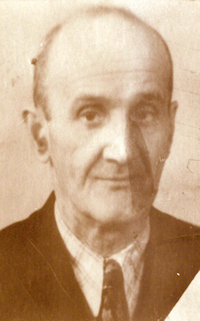
In 1992, in Monaco, Captain Constantin Copaciu wrote a short biography of his friend, which we present here in full, as an example of camaraderie between two Romanian military hydrographers:
"He was born in Constanța at the turn of the century, in 1900 (6 March, ed. note), which amused his colleagues, who nicknamed him Papa! He attended the Naval School, Class of 1928. I knew him very well; we worked together from around the end of 1939, when he was appointed head of the Hydrographic Service in Constanța. Our ties remained close until I was sent to Vienna, to the International Danube Commission, while I remained, nonetheless, part of the Hydrographic Office's staff. Having returned to the country after the war, I naturally took up my place again at the Hydrographic Office, and so my collaboration with Captain Ovidiu Limbidi resumed.
Captain Ovidiu Limbidi's parents were very wealthy merchants. They ran a fine optical instruments shop on Carol Street, near Ovidiu Square, run by his two older brothers; the third brother had attended the Naval Petty Officers' School, which he left for reasons unknown to me. Around 1965, he was still living in Constanța; his name is Spiru Limbidi.
Between 1945 and 1949, while serving on the Soviet-Romanian Joint Commission for border demarcation, he was stationed on the Lower Danube, while I was at the Danube Mouths (the Chilia Branch and the sea). This brings to mind an episode you yourselves recounted in the journal Cuget ..(?), Year IV, No. 625, under the title Remember. Around 1942 (?), in August (the 26th!), I was tasked by Admiral Păiș (Nicolae, ed. note), Secretary of State for the Navy, with travelling to Vâlcov, where a monitor was stationed — if I recall correctly, the rest of the monitors were at Tulcea — in order to draw up a report on the circumstances in which the tug Smârdan sank, losing on that occasion its crew and the entire hydrographic team!
There I met Captain Ovidiu Limbidi, with whom I travelled to the site where the tug had been lost. Naturally, we found no trace of it, other than the ripples playfully drifting towards the open sea. Our report could only confirm the official report of Captain Mişu Petrovici, commander of the monitor present at the scene. The operation had been carried out with the help of the local population, who fraternised extensively with the Soviets.
I return to Captain Limbidi's career. In 1938 he was promoted to Captain, and I believe, in 1942, to Lieutenant Commander; he appears to have been promoted to Captain around 1949-1950, though I am not entirely sure of this, as at that time I was busy — with great interest and diligence — visiting the lead mine at Baia Sprie! On my return from these countless information and induction visits, I found Captain Ovidiu Limbidi on his deathbed; he passed away a few months later, in 1965. He was buried in a picturesque cemetery (Sf. Vineri, ed. note), near one of Bucharest's railway stations, so that he might hear the chirping of the sparrows from Topârceanu's famous poem, announcing that the express train had passed.
He had a gentle, warm nature, loving discreetly but deeply the sea on whose shores he had been born — skilled, modest, with great good humour, and devoted to his Country, whose history fascinated him!"
1949-1954
Commander Vasile PANAITESCU
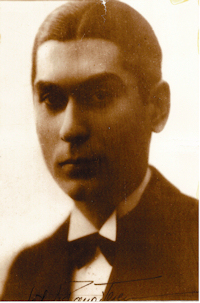
He was born on 30 August 1910 in Ploiești and died at the age of 91 in Constanța. He attended the Theoretical Lyceum in Râmnicu Sărat, followed by the Naval School (1930) and the School of Application and Specialties (1934).
He received his first officer's insignia in 1932, his second five years later, the rank of Captain during wartime (1942), Lieutenant Commander in 1945, Commander in 1949, and, four years later, Captain, 1st Rank, before being placed on the reserve list in 1956.
At the start of his career he served briefly with the River Naval Base, before being transferred in 1935 to the Sea Division as navigation officer aboard the destroyer Regina Maria, then moved to the gunboat Locotenent Remus Lepri as artillery officer. In the period leading up to Romania's entry into the Second World War, he served as mine warfare officer aboard the auxiliary cruiser Durostor, from which he took part in laying and monitoring the minefields off the Romanian maritime ports. As a mine warfare specialist, he oversaw the construction and acceptance testing of hundreds of naval mines at the Reșița Metallurgical Works.
On 13 June he was transferred to the auxiliary cruiser Carol I as second-in-command, monitoring the minefields with the ship as well as the passage of own and allied vessels through the channels. After the ship sank (15 October 1941) off Varna, he served for six months at the Constanța Port and Zone Command, and the following year with the Maritime Naval Forces.
On 1 April 1943, he was appointed second-in-command aboard the auxiliary cruiser Dacia, where he remained for one year. Between 1944 and 1946, he served with the Navy Depots. From 1 September 1946, he was given command of the gunboat Locotenent Comandor Eugeniu Stihi, before becoming Director of Studies at the Naval School on 21 January 1948.
He served as head of the Maritime Hydrographic Service from 8 November 1949 to 1954, when he was transferred to the Naval School as head of the Navigation course and later dean, from which position he was placed on the reserve list in 1956.
In civilian life, he worked as an accounting auditor at I.C.R.A. Constanța, retiring in 1972. He was a passionate navigator and mathematician, publishing Tables for Calculating the Azimuth of Celestial Bodies, using a personal method for solving the spherical triangle of position. He also dabbled in literature, following in the footsteps of Cincinat Pavelescu and Captain Aurelian Păunescu, writing epigrams which, towards the end of his life, he published in a volume titled "Acupuncture Exercises: Epigrams and Epitaphs."
1954-1958
Captain, 2nd Rank, Constantin NECULA
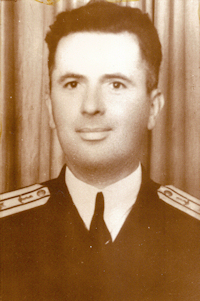
Born in the commune of Brănești, Dâmbovița County. Rear Admiral Engineer Constantin Necula began his studies in his home commune. Drawn to a military career, he attended the Mihai Viteazul Military Lyceum in Târgu Mureș and then the Mircea Naval School in Constanța, graduating with the Class of 1936 of this prestigious naval military educational institution.
During his time at the Application School, he trained at Balcic Bay, taking part in the measurements carried out for the Ekrene-Balcic hydrographic survey, and the following summer in the works covering the Ekrene-Balcic-Caliacra region. This was the period in which the young midshipman Constantin Necula became acquainted with Romanian maritime hydrography. Having fallen in love with the new specialty, the following year he would attend special courses in Topography and Topogeodesy at the Army's Geographic Institute.
Also as part of his development and refinement as a naval officer, he enrolled in the two-year course at the Bucharest Military Academy, Navy Section, which he completed as top of his class in 1951. In the early years of his career, the officer served as a hydrographer with the Navy's Hydrographic Service (1939-1941).
When Romania entered the war on 22 June 1941, he was appointed military commander of the tug Istria, part of the Security Flotilla, subordinate to the Constanța Port and Zone Command. Here he also concurrently held the position of head of the Military Piloting Service, until May 1943, when he was appointed head of Bureau 2 in the staff of the Maritime and River Coast Command.
After almost a year, he was transferred to the gunboat Ghiculescu as second-in-command. Aboard this ship, together with the other officers, he lived through the Navy's ordeal on 5 September 1944. Two months later, on 7 November, he was given command of the Constanța military port.
On 1 April 1945, he returned to his hydrography specialty, being seconded for a year and a half as a specialist with the Soviet Hydrographic Service in Constanța, and then with the Maritime Hydrographic Service. In February 1947, he was appointed head of the Navigation Safety Service, before being given command of the gunboat Stihi for one year in September 1948.
On returning to the Navy after graduating from the Academy, he was assigned as commander of the Danube Flotilla in Galați. Here he also taught courses at the Faculty of Naval Construction. In 1953, he was appointed commander of the Constanța Maritime Vessels Brigade, and a year later became deputy chief of staff of the Government Flood Defence Command. He held this position only briefly, returning to the Maritime Hydrographic Service as its head.
A distinguished hydrography specialist who also proved to be a capable organiser, he took the necessary steps to transform the Maritime Hydrographic Service into the Maritime Hydrographic Directorate in 1956. Two years later he was placed on the reserve list. In civilian life he held positions still related to nautical activity, being appointed in 1960 as commander of the pleasure boat Dacia, which he brought from the Oltenița Shipyard to Lake Techirghiol. For two years he was head of the Navigable Waterways Section within NAVROM Galați (1960-1962), and until 1964 he was head of the forestry river vessels of the Dobrogea General Directorate of Forest Economy.
For the following three years he served as secretary of the Dobrogea Branch of the Beekeepers' Association of the Socialist Republic of Romania. In May 1967, he returned for one year to the Navy, teaching the course on the Organisation of the Merchant Navy and Cargo Loading and Stowage. From 1968 he moved to Bucharest, where he still lives today. He worked until retirement (1977) as chief engineer at the State Water Council – General Directorate of Water Management, and the Bucharest Central Flood Defence Commission. Drawing on his extensive experience as an employee of the Maritime Hydrographic Service/Directorate, he wrote the Maritime Meteorology manual, published in 1959 by the Military Publishing House, and was also the author of numerous studies and innovations, as well as a memoir related to the epic of the ship Struma.
1958-1960
Rear Admiral Gheorghe SANDU
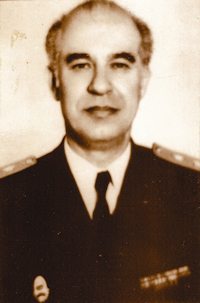
He was born on 21 January 1921 in the town of Calafat, and attended primary school and the Nicolae Bălcescu Lyceum in the town of Brăila. In Constanța, he chose the Mircea Naval School, belonging to the Desrobirea Class of 1942, a class that carried out its first-year training directly at the front. Upon receiving his midshipman's insignia, he was also given his first posting, as navigation officer aboard the torpedo boat Năluca, under the command of Lieutenant Commander Gh. Roșescu.
In the officer's first performance report, the ship's commander noted, among other things, that in just five months he had taken part in 13 combat missions, covering 1,937 nautical miles. On 1 July 1943, he was transferred aboard the auxiliary cruiser Dacia as adjutant and signals officer. The ship's commander praised his qualities, writing: "He shows initiative and foresight. He has trained the personnel under his command well."
In October 1943, he returned to the Năluca, this time as navigation officer. He served aboard the ship until it sank on 1 September 1944. He took part in Operation 60,000, participating in 14 war missions in the Odessa-Constanța area. He was recommended for the Order of the Star of Romania, 5th Class. The ship's commander rated him "a very good naval officer."
In September-October 1944, he served as adjutant officer at the Dobrogea Territorial Defence Command. On 1 November 1944, he was appointed assistant to the military commander of the port of Brăila, remaining in this position until 9 March 1945. The port commander assessed him as "a very good and dependable officer." Transferred to the Minesweeping Flotilla, he successively served as commander of the river minesweeping tugs Maria and Cantacuzino, taking part in minesweeping operations between Calafat and Baziaș, and was commended by both the River Forces Command and the Navy for his work.
After graduating from the Navy's Application School in 1946, he held several positions within the Mixed Navy Battalion. In 1947, he returned to Constanța as navigation officer with the Minesweeping Flotilla. Between October 1947 and 31 July 1948, he was second officer aboard the training ship Mircea. The commander of the Naval School, Captain Ion Stoian, gave him a fitting and favourable assessment, from which we quote: "Fine military knowledge, which he applies methodically, showing sound judgment. Highly capable of hard work and with fine academic ability, he teaches the navigation course to the cadets in a methodical way, engaging their interest through his attractive and practical style of presentation."
For two years, 1948-1950, he attended the General Military Academy. On returning to the Navy, he was appointed head of Bureau 1 in the Materiel Section of the Navy Command, then head of the Naval Military School (1951-1954), acting commander and, after two months, titular commander of the Danube Flotilla (1954-1955), commander of the 230th River Vessels Brigade (1955-1956), chief of staff of the C.F.N.M. (1956-1958), head of the Maritime Hydrographic Directorate (1958-1960), head of the Naval War College (1960-1961), commander of the Navy (1961-1963), head of the Naval Tactics Department at the General Military Academy (1963-1972), head of the Navy Section within the General Staff's Operations Directorate (1972-1977), deputy minister of Transport and Telecommunications and head of the Naval Transport Department (1977-1980), chief of staff and deputy commander of I.C.I.T.L. Bucharest (1980-1981). He was placed on the reserve list with the rank of Vice Admiral in 1981. As a judge for the World Ship Model Association, he was among the few to be awarded the Nautical Medal of Honour.
1960-1963
Captain, 1st Rank, Nicolae MILU
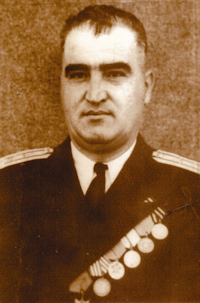
He was born on 3 February 1915 in the commune of Trăisteni, Doftana Valley, Prahova County, where he also attended the first grades of primary school, continuing for two years at the Ioan Meșota Lyceum in Brașov. In 1930, he moved to the King Ferdinand Military Lyceum in Chișinău. On graduating in 1936, he chose the Naval School in Constanța, becoming a naval officer in 1939.
He held his first posting aboard the depot ship Constanța, whose commander concluded in Midshipman Milu's assessment: "If he continues as he has begun, he will be a very good officer." On graduating from the Application School, the director of studies noted that: "The very good marks he has obtained and his admirable preparation in every respect entitle him to be declared a graduate, even without examination."
Shortly before Romania entered the war, he was assigned as navigation officer aboard the depot ship Constanța, standing in as artillery officer when needed. On 3 August 1941, during an enemy air raid on Constanța, he shot down two aircraft, a fact confirmed by German anti-aircraft defences. For this feat and others that followed, he was recommended for and sent to Germany to attend the Torpedo Boat Commanders' School; for the courage and spirit of self-sacrifice he showed on every occasion, he was recommended for the Order of the Crown of Romania, 5th Class.
During the two months (15 October – 15 December 1941) he trained with the German Navy, he took part in five combat actions in the English Channel, being lightly wounded. On his return to the country, he was given command of the torpedo boat Vijelia, with which he took part in numerous war actions until September 1943, when he was transferred for two months as torpedo officer aboard the destroyer Mărășești. From November 1943 to October 1944, he commanded the torpedo boat Vârtejul.
He was promoted by selection to the rank of Captain while serving on the river, as military commander of the port of Moldova Veche (1 November 1944 – 11 July 1945). He then remained with the River Forces, working on the Staff, and was regarded as a very good and thoroughly dependable naval officer.
In 1946, he returned to the sea, successively commanding the Torpedo Boat Squadron, the destroyer Mărășești, the training ship Mircea, the training ship Libertatea, and, concurrently, the 514th Training Ships Detachment. The commander of the Navy wrote in his 1953 assessment: "the officer is a good sailor, brave, fairly energetic and calm."
Between October 1954 and October 1955, he commanded the 127th Maritime Base, after which he took over command of the Destroyer Division. For three years (1955-1958) he was head of the Naval War College, where "he was transferred in order to establish order and the discipline necessary for a school. He succeeded in raising the standard of order, discipline and instruction at the War College to the required level."
These words were written by the commander of the Naval Forces, Rear Admiral Gh. Sandu, whom he would succeed two years later in command of the Maritime Hydrographic Directorate. Captain, 1st Rank, Nicolae Milu was commander of the Maritime Hydrographic Directorate for three years.
Shortly after his appointment, he received orders to move the Directorate to Mangalia. Over the following two years, the unit, dispersed across five locations, carried out its activity with considerable difficulty — all the more so since, a year earlier, hydrographic works had begun in the Comorova – Vama Veche area, with a view to surveying new resorts.
This was, in fact, the beginning of the Black Sea hydrographic survey campaign, which from 1962 would also extend north of Constanța, to Mamaia, Midia, and the Chituc sandbar. On the strength of a well-argued report, the head of the Maritime Hydrographic Directorate succeeded, in 1962, in moving the Directorate back to Constanța. The new premises assigned were in Anadolchioi. The hydrographic campaign extended in 1963 as far as Gura Portiței and from there to Sfântu Gheorghe. He was placed on the reserve list in 1963. Over the following decade, he worked for the newly established Ocean Fishing Fleet, of which he was director between 1973 and 1974. He was decorated in Germany with the Iron Cross, 3rd Class.
1964-1969
Captain, 2nd Rank, Alexandru CONSTANTIN
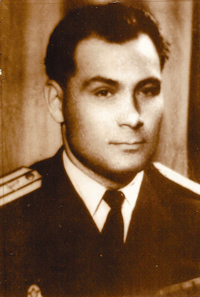
He was born in the commune of Cioara, Ialomița County, in 1926. In his home commune he completed his primary education, after which he became an agricultural worker. Called up for military service in the 1950s, he was admitted at a time of large-scale purges based on class origin, his own background being considered sound. He first worked at the Personnel Directorate of the Ministry of the Armed Forces, after which he was transferred to the Navy Command as head of personnel.
With the departure of Captain, 1st Rank, Nicolae Milu from command of the Hydrographic Directorate, an important vacancy was created, to which Captain, 2nd Rank, Alexandru Constantin was appointed. As the unit was a complex one, with specialised structures in particular, the need was soon felt for oversight and guidance from a naval officer specialising in navigation. The commander of the Navy, Rear Admiral Engineer Grigore Marteș, appointed, by daily order of the Navy Command, Captain, 2nd Rank, Engineer Corneliu Enăchescu (seconded two days a week) to oversee and guide the Directorate's activity.
In 1969, the officer was transferred to the Naval Officers' War College, where he served as head of the qualification course. Two years later, he returned to the Maritime Hydrographic Directorate, where he was entrusted with the leadership of the Maritime Signalling Section. He retired from this position. He passed away in 1995, in Constanța.
1969-1990
Captain, 1st Rank, Engineer Corneliu ENĂCHESCU
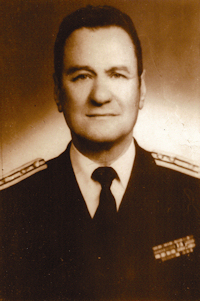
He was born on 23 September 1927 in the commune of Plopeni, Constanța County. Shortly after his birth, his family moved to the city of Constanța, where he attended primary school and the Mircea cel Bătrân Lyceum. After graduating in 1947, he chose the Mircea Naval School, belonging to the Class of 1949.
He was posted aboard the gunboat Ghiculescu as navigation officer, and two years later became second officer on the same ship. Between 1951 and 1953, he commanded the gunboat Locotenent Comandor Stihi. From 1953 to 1965, he served in higher naval military education, successively as senior lecturer (1953-1955), head of the navigation and nautical astronomy department (1955-1963), and deputy commander for education and head of the Education Section at the Naval War College (1963-1965).
During this period he continued to develop professionally, becoming a teaching staff member well regarded by both his students and his superiors. Between 1955 and 1960, he attended the Faculty of Electrical Engineering at the Gheorghe Asachi University in Iași.
In 1965, he was appointed navigation specialist in the Combat Readiness Section of the Navy Command. Four years later, he was entrusted with command of the Maritime Hydrographic Directorate, a position he held for 21 years, making him, to this day, the longest-serving head of this important Naval Forces institution.
He wrote numerous specialist articles and studies in the Navy Bulletin, the International Hydrographic Bulletin, published by the International Hydrographic Bureau in Monte Carlo (Monaco), in the Information Bulletins of the prestigious Iași Polytechnic, as well as those of Al. I. Cuza University. Over more than four decades of service in the Navy, the officer rose through the ranks to Captain, 1st Rank. By Presidential Decree No. 170 of 7 March 2007, he was promoted to the rank of Flotilla Rear Admiral. He is a member of the Romanian Naval League.
1990-1997
Rear Admiral Gheorghe VOINEA
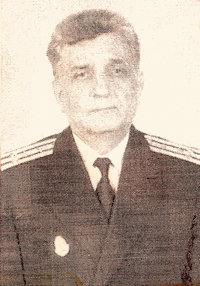
He was born on 3 February 1937 in the town of Pașcani, where he completed his primary and secondary education, after which he chose the Naval War College, graduating in 1959; on 21 September he was promoted to Lieutenant and assigned to the Danube Flotilla, where, within the 88th Minesweeper Division, he was given command of a minesweeper.
In 1962, he was promoted to senior Lieutenant, and two years later was appointed commander of Section 1, Minesweepers, within Group II Minesweepers, and boat commander. Between 1965 and 1967, he served as political instructor within the same 88th Division. In 1968, he was appointed to command the 500 HP river tug of the 131st Auxiliary Vessels Division, and a year later was appointed within the division to the position of navigation specialist and military censor.
From 1 October 1970, he transferred to the 24th River Brigade as navigation specialist in the Operations and Combat Readiness Bureau. The following year, he was posted to the command river vessel as second officer, a position he held for five years, after which, holding the rank of Captain, 3rd Rank, he attended the Military Academy, Combat Arms Faculty, Navy Section.
After graduating from the Academy, he returned to the river, serving as chief of staff and deputy commander of the 92nd River Minesweeper Division (1978-1980). In 1980, he was promoted to Captain, 2nd Rank, and appointed head of the Operations and Combat Readiness Bureau on the staff of the 24th River Brigade.
On 25 May 1982, he was appointed, within the Navy Command, as officer 1 for operational and tactical readiness in the staff's Operations Section. Between 1985 and 1990, he was head of the Operations Bureau in the Operations Section of the Navy Command's staff. On 23 August 1987, he was promoted to Captain, 1st Rank. At the beginning of May 1990, he was appointed head of the Maritime Hydrographic Directorate Constanța, remaining in command of the unit for seven years.
1997-2001
Captain Ioan IVĂNASCIUC
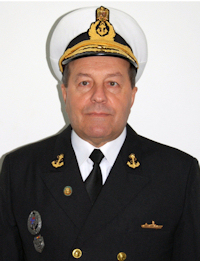
He was born on 5 September 1947 in the commune of Calafindești, Suceava County. In his home commune he completed the first seven grades, then the first two years of secondary school in Suceava, and the following two years at the Ștefan cel Mare Military Lyceum in Câmpulung Moldovenesc.
He continued his military studies at the Naval War College in Constanța, graduating with the rank of Lieutenant, Class of December 1968. His first posting in the Navy was as cadet platoon commander at the 1st Cadet Battalion of the Naval War College. In October of the following year, he was appointed communications and radar officer aboard Boat 72 of the 133rd Boat Division of the 29th Boat Brigade. Three years later, he became second officer and navigation officer aboard the same boat.
Between 1973 and 1975, he was an officer cadet at the General Military Academy, Combat Arms Faculty, Navy Section. On returning to the 133rd Boat Division, he was given command of Boat 70, and in August 1976 was appointed commander of Missile Boat 74. On 1 April 1977, he was appointed deputy commander of the 81st Torpedo Boat Division, a position he held for seven years.
Between 1984 and 1985, he served as a staff officer with the 29th Boat Brigade, and the following year as chief of staff and first deputy commander of the 133rd Missile Boat Division. In 1987, he attended the post-academic course with a naval profile. That same year, he was given command of the 93rd Torpedo Boat Division, a command he would hold for seven years.
In October 1994, he took up the position of head of the Combat Readiness Section at the Naval Petty Officers' School, and on 1 April 1997 he was transferred to the Maritime Hydrographic Directorate Constanța, holding command of the Directorate for four years, after which he was placed on the reserve list on 30 June 2001. Over more than three decades of service in the Navy, the officer rose through the ranks to Captain, and after being placed on the reserve list, in recognition of his merits, was promoted to the rank of Flotilla Rear Admiral.
2001-2005
Captain, Dr. Aurel CONSTANTIN
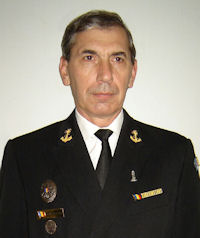
He was born in Mizil on 13 September 1950. After a while, his family moved to Ploiești, where he attended General School and then the Dimitrie Cantemir Military Lyceum in Breaza (1969). Between 1969 and 1973, he attended the Mircea cel Bătrân Active Naval Officers' School, graduating top of his class. His first posting was as navigation officer aboard Base Minesweeper 63 of the 146th Base Minesweeper Division.
In 1974, he was appointed a staff officer with the same division, but only for a few months, after which he was transferred, in the same capacity, to the staff of the 41st Maritime Division. From 1976 to 1978, he served as an officer at the Navy Command. Over the following two years (1978-1980), he attended the General Military Academy, graduating top of his class.
On returning to the Navy, he was assigned to the staff of the Mircea cel Bătrân Naval Institute for a further two years, after which he returned to the Navy Command (1982-1984). For six years he served on the staff of the Mircea cel Bătrân Naval Institute, where he would remain after 1990 as well, successively holding the positions of officer 2 and lecturer in the psycho-pedagogical group under the deputy commander for education and staff affairs, then officer 2 responsible for editing the Academy Review in the Documentation, Relations and Secretariat Bureau, and head of the Documentation, Relations and Secretariat Bureau within the Education and Scientific Research Section.
On 25 November 1995, he was transferred to the Maritime Hydrographic Directorate as deputy head of the Directorate, before serving as Head of the same institution between 25 July 2001 and 30 September 2005. Over the course of his career, the officer rose through the ranks to Captain and completed a series of courses: the Turkish Language Proficiency Course (1995), the Officer Refresher Course on Mobilisation, Personnel and Strength Records (1997), the single-profile post-academic course at the General Military Academy, and the Capability Course at the Command and Staff College of the Academy of Higher Military Studies (1998).
In 2001, he obtained a doctorate in Economics from the National Institute for Economic Research of the Romanian Academy, with the thesis "Efficient Use of the Workforce in Maritime Transport: Systems and Procedures." He is a member of the Romanian National Committee for Oceanography, under the authority of the Romanian National Commission for UNESCO (since 2004) and of the Oceanology and Limnology Commission of the Romanian Academy (2003). He currently serves as president of the Romanian Naval League, Constanța Branch.
He wrote numerous articles and studies in the journals Marina Română, Marea Noastră, and Hydro International, published by GITC Netherlands, as well as in the newspaper Observatorul Militar. He contributed to drafting the Manual of Hydrographic, Navigational and Hydrometeorological Support for the Naval Forces (2004) and prepared the course notes for the subject of Human Resources Management (2002).
While serving as head of the Maritime Hydrographic Directorate, he drafted, negotiated and promoted the bill on the organisation of maritime hydrographic activity, adopted by the Romanian Parliament and promulgated in October 2004. He also proposed and supported Romania's accession to the Convention of the International Hydrographic Organization, an action concluded in April 2002, in Monaco. He was promoted to the rank of Flotilla Rear Admiral in 2009.
2005-2007
Captain Alexandru MACAVEI
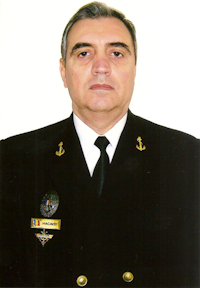
He was born on 10 May 1956 in the commune of Crângeni, Teleorman County. After completing secondary school, he chose the Mircea cel Bătrân Naval Institute in Constanța, belonging to the Class of 1979. As a recent graduate, he was appointed artillery and missile officer aboard an OSA I-type missile boat.
Five years later, he was promoted to instructor at the Navy Training Centre. Between 1997 and 1999, he attended the Military Academy, Navy specialisation. On returning to the Naval Forces, he was given command of a 4-tube torpedo boat, a position he held for five years. From 1994, he served as head of Intelligence at the Missile Brigade, until 1998, when he was appointed bureau head in the Operations Service of the Naval Forces Staff.
The year 2001 marked an important moment in the officer's career, as he was sent for two years to France, where he attended the Interservice College of the Armed Forces (Collège Interarmées de Défense), while also studying at the University of Paris II (Sorbonne), Faculty of Law, obtaining a specialised higher studies diploma (master's degree) in Defence, Geostrategy, and Industrial Dynamics.
On returning to the country, he was assigned head of the Hydrography Section within the Maritime Hydrographic Directorate. The following year, the officer was appointed to command the 50th Corvette Division, Mangalia. Among the important activities in which he took part, we mention his participation in the exercise led by the General Staff, "Force 2000," and his participation in the fourth activation of the BLACKSEAFOR Task Group, as voyage commander of the corvette Contraamiral Horia Macellariu, in 2005.
In the autumn of 2005, he was appointed to command the Maritime Hydrographic Directorate, a position he held until March 2007. He quickly became familiar with the Directorate's specific challenges, having previously led an important section of the institution. The last position held by Captain Alexandru Macavei in the Naval Forces was head of Communications and Information Technology at the Fleet Command, after which he retired in 2009.
He currently teaches the Dead Reckoning and Coastal Navigation course at the Mircea cel Bătrân Naval Academy, Constanța. Captain Alexandru Macavei is a member of Frères d'Armes. Throughout his career, the officer has published a number of articles in the journals Marina Română and Tomis. He is co-author of the Romanian-French-English Dictionary of Strategic International Relations, produced between 2004 and 2005.
2007-2010
Captain, Dr. Romeo BOSNEAGU
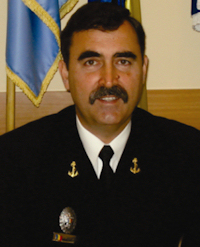
He was born on 20 October 1955 in the city of Constanța. After completing his studies at the Theoretical Lyceum, he chose a military career, becoming a student at the Mircea cel Bătrân Naval Institute in Constanța, where he completed his studies in 1978. For 11 years he successively served as navigation officer, second officer and commander of the 4-tube torpedo boat within the 29th Boat Brigade, Mangalia.
Between 1989 and 1992, he served as an officer in the Education Section of the Navy Command. From 1992 to 2006, he was an associate professor and head of the Captain Gheorghe Balaban Department of Nautical Sciences at the Mircea cel Bătrân Naval Academy.
During this period, he completed a master's course in Optimisation of Naval Transport (1999), and doctoral studies at the University of Bucharest, Faculty of Geography, where he obtained his doctorate with the thesis The Influence of Geographic Conditions on Transport Routes in the Black Sea Basin (2004), as well as studies at the Technical University of Cluj-Napoca.
April 2006 marked the officer's transfer to the Maritime Hydrographic Directorate. He first served as head of the Maritime Signalling Section; in the first part of 2007 he served as deputy head, before being appointed head of the Directorate, a position he held until the summer of 2010, when he retired. It was also within this institution, in 2006, that he received the rank of Captain.
He is a member of the Romanian Naval League and president of the Navy Officers' League. He has led and been a member of several scientific research teams. He has published a number of scientific works, among which we mention: Radio-electronic Navigation, Naval Kinematics and Radar Navigation, Military Maritime and River Geography, Radio-electronic and Great-circle Navigation, and The Influence of Geographic Conditions on Transport Routes in the Black Sea Basin (Western Sector). He currently teaches navigation at the Mircea cel Bătrân Naval Academy.
2010-2012
Captain, Dr. Adrian FILIP
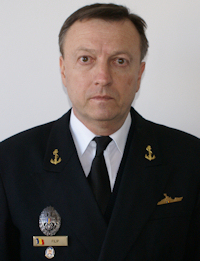
Captain Adrian Filip was born in 1960, in Arad. He graduated in 1983 from the Naval Radio-Electronics section of the Mircea cel Bătrân Naval Institute in Constanța. On completing his studies, he was assigned to a vessel of the 133rd Missile Boat Division as sensors and communications officer.
From 1984 to 1992, he worked as a radio-electronics staff officer, on the staff of the 126th Torpedo Boat Division and, respectively, the 133rd Missile Boat Division. In 1994, he graduated from the Faculty of Command, Staff and Military Technology at the Mircea cel Bătrân Naval Academy in Constanța, after which, until 1999, he served as commander of an OSA I-type missile boat.
In 1999, he attended the Joint course at the NATO-PfP Regional Training Centre organised by the United Kingdom, and after completing the course he served as commander of a TARANTUL-type missile ship until 2001, when he was appointed head of the Operations Command Bureau at the 9th Joint Operational Command. In 2000, he attended the Command and Staff College for Major Naval Units.
At the end of 2001, he was appointed sensors and communications officer aboard the submarine Delfinul, serving as acting second-in-command until 2003, when he was appointed division chief of staff. Between 2004 and 2005, he coordinated simulation-based training within the Training Service of the Naval Forces Staff.
In 2005, he established the Information Technology, Simulation and Assessment Centre on the structure of the Naval Forces Information Technology Centre, coordinating the design of software applications for naval operations and laying the groundwork for pioneering areas within the Navy, following the model of other NATO states: Simulation-based Training; Operational Training of crews; and Operational Assessment of ships and crews for national and international missions.
Given the development of the concepts of Simulation-based Training and Operational Training and Assessment of Naval Forces structures, a new structure was established in 2007: the Training, Simulation and Assessment Centre, which he led from its establishment until 2009. During this period, he attended the NATO Evaluator Course Level I: NATO Interoperability, and the NATO Evaluator Course Level II: Naval Forces Operational Capabilities.
Since 2008, he has been a doctoral candidate in Military and Intelligence Sciences at the "Carol I" National Defence University, and is due to defend his doctoral thesis this year. Between 2008 and 2009, he attended the courses of the National Defence College. In 2009, he completed the International Relations course at the Romanian Diplomatic Institute.
In 2009, he was appointed Head of Naval Forces Training, developing the work begun at the Training, Simulation and Assessment Centre. In July 2010, he was appointed Head of the Maritime Hydrographic Directorate. In 2012, he was appointed Chief of Staff at the Naval Fleet Command.
2012-2016
Captain Vasile NECULA
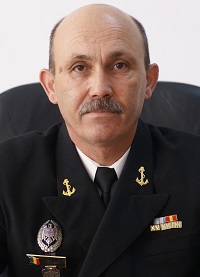
Captain Vasile Necula was born in 1962, in the town of Comănești, Bacău County. He graduated from the "A. I. Cuza" Naval Military Lyceum in 1981, and then from the Faculty of Navigation of the Mircea cel Bătrân Naval Institute in 1985.
On completing his studies, he was assigned to command a torpedo boat of the 81st Torpedo Boat Division until 1989, when he was promoted to section commander within the same hydrofoil torpedo boat unit. From 1997 to 1998, he served as second officer aboard a large torpedo boat.
In 2000, he graduated from the Interservice Faculty of the Academy of Higher Military Studies in Bucharest, on completion of which he was appointed commander of a large torpedo boat. In 2001, he was appointed by order of the Chief of Staff of the Naval Forces to serve as Chief of Staff of the 81st Hydrofoil Torpedo Boat Division.
From 2001 to 2003, he also served as section commander of hydrofoil torpedo boats and as commander of large torpedo boats. In July 2001, he was appointed Officer 2 in the Combat Readiness Bureau under the Chief of Staff of the "Mircea cel Bătrân" Naval Academy. In 2003, he was appointed head of the Training and Combat Readiness Bureau under the Chief of Staff of the "Mircea cel Bătrân" Naval Academy.
In 2005, he attended the postgraduate leadership course "Management of Human and Material Resources in the Naval Forces." Between 2006 and 2008, he served as commander of the 306th Training Ships Division. In 2008, he was appointed Deputy Chief of Staff for Support at the Fleet Command. In 2009, he was appointed Deputy Chief of Staff for Training at the Fleet Command.
In 2012, he attended the postgraduate advanced course in strategic leadership (Joint level) at the "Carol I" National Defence University. Between 2012 and 2016, he was appointed head of the Maritime Hydrographic Directorate.
2017-2023
Captain Nicolae VATU
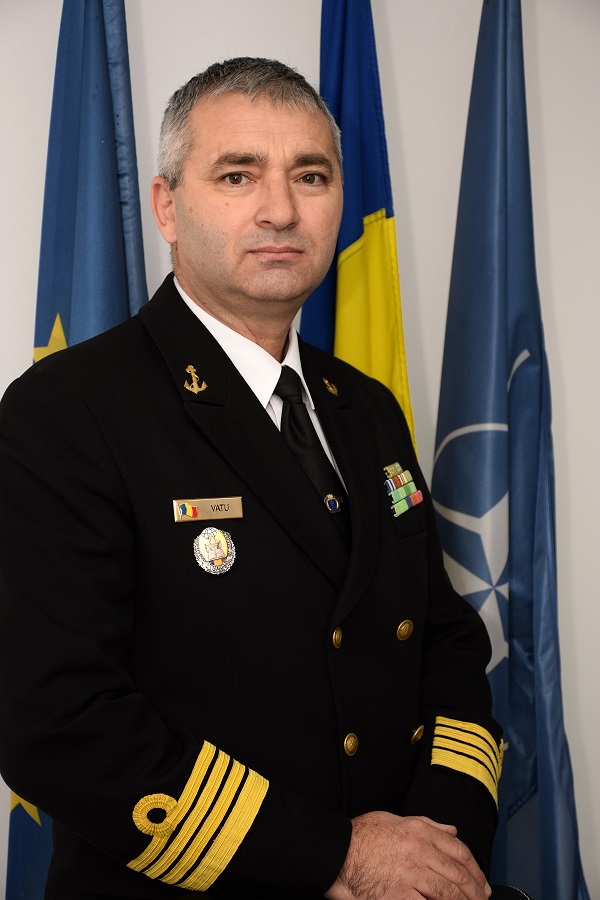
Born on 28 September 1972 in the locality of Coteana, Olt County, he graduated from the "A. I. Cuza" Naval Military Lyceum in Constanța in 1991, then attended the courses of the Naval Faculty at the "Mircea cel Bătrân" Naval Academy. In 1996, he graduated from the Naval Academy, qualifying as an engineer in navigation and hydrography equipment while also holding the rank of Lieutenant.
He was promoted to the rank of Captain in 2001, Lieutenant Commander in 2005, Commander in 2010, and Captain in 2015.
On completing his studies at the Naval Academy, he was assigned to his first posting as second officer and head of the navigation, combat and communications service aboard one of the corvettes of the Anti-Submarine Warfare Division. Between 1998 and 2004, he served aboard the maritime rescue and diver salvage tug Grozavul, where he held positions in the fields of navigation and communications. During this period, he qualified as a diver and took part in various missions aboard the ship or as a diver during multinational exercises in which the Naval Forces took part, as well as in humanitarian operations (the Turkey earthquake — 1999; extinguishing the fire aboard the vessel Mesta).
In 2004, he was appointed head of communications and information technology at the Diving Vessels Division, a position held until 2006, when he was admitted to the "Carol I" National Defence University as a master's officer, specialising in Naval Forces Combined Arms Leadership. During this period, he attended various refresher courses, such as: the GMDSS course, the naval communications instructor course, the crisis management course, as well as intensive English language courses.
On completing his master's degree in 2008, he was assigned as Chief of Staff of the Naval Missile Division, and between October 2009 and September 2016 he held the position of Chief of Staff at the Maritime Hydrographic Directorate. Between 2008 and 2011, he furthered his academic training through doctoral studies at UNAp in the field of "Military and Intelligence Sciences."
He taught navigation sciences as an associate professor at the "Mircea cel Bătrân" Naval Academy in Constanța, for both military and civilian students, from 2009 to 2016. From September 2016 to August 2017, he was appointed to carry out the duties of Deputy Head of the Maritime Hydrographic Directorate.
Between August 2017 and March 2023, he had the honour of leading the Maritime Hydrographic Directorate, focusing on fulfilling the institution's duties arising from its status as national authority in the field of hydrography, and maintaining close ties with specialised national and international institutions, with a view to promoting the image of Romanian hydrography on an international scale.